Continuous wear
Reusable or stay-length construction selected around comfort and exposure.
Use case / All-inclusive
All-inclusive properties often need the guest credential to remain available throughout the day. We define wear period, comfort, water exposure, group identification and supported system functions before recommending a format.
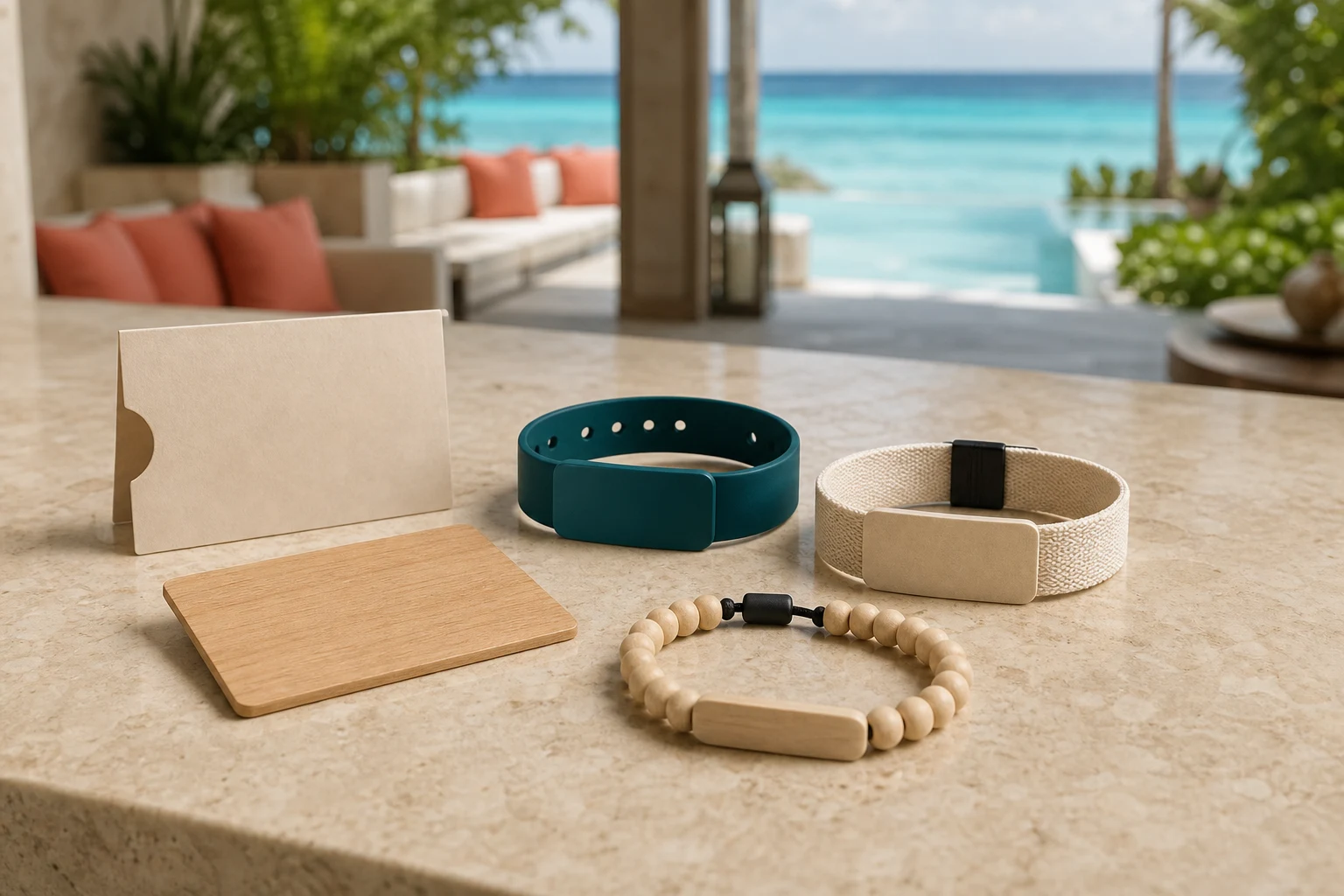
Multi-day comfort
Guest-group identification
Clear replacement and reissue rules
Operational fit
Product, credential and delivery decisions follow the use case—not the other way around.
Reusable or stay-length construction selected around comfort and exposure.
Colour, print or numbering can support operational differentiation.
Access or service functions included only after system confirmation.
Manufacturer detail
These are production controls, not assumed functions of a property's access system.
An all-inclusive credential is often worn continuously for the length of a stay, through sleep, swimming and showering. At that duration comfort stops being a preference and becomes the reason a credential stays on a wrist. A band that irritates, catches on clothing or holds water against skin is removed by the guest, and a removed credential is an operational problem regardless of how well it was manufactured.
The inputs are width, edge profile, closure type, material flexibility and how the inlay is carried. A rigid module in the wrong position is felt within a day. We select constructions that keep the electronics away from the pressure points identified for the wear period, and we produce a sample the property can put on a real wrist for several days before approving the run.
All-inclusive operations frequently need visible tiers: room level, package, adult or child, arrival cohort. Colour is the fastest differentiator and the most expensive one, because each colour is its own production item with its own minimum. Printed bands, deboss positions and numbering blocks can carry the same separation on a shared body at a much lower stock cost.
It is worth deciding early how many tiers genuinely need to be distinguishable without a reader. Properties often start with six and settle at three once the minimums are visible. The specification records which differentiators are visual and which are encoded, and the encoded side remains the system owner's decision — a printed tier tells staff something, but it does not by itself grant or restrict anything at a reader.
A closure that cannot be removed without cutting is appropriate where the credential must not transfer between guests. A closure the guest can remove and refit is appropriate where comfort or shower removal matters more than transfer control. These are opposite requirements and the property has to choose, because a single construction cannot satisfy both.
The reissue rule follows from that choice. If credentials are cut off at departure, the volume equals total arrivals plus a replacement allowance. If they are removable and returned, the volume is lower but a collection and cleaning process has to exist. We size the run against whichever model the property actually operates rather than the one it intends to introduce.
All-inclusive demand is seasonal and mostly forecastable from arrivals. The planning inputs are peak concurrent occupancy, average stay length, replacement rate for damaged or removed bands, and the tier split. Those four numbers give a defensible run size; without them, orders tend to be placed at whatever number the previous one used.
Each visually distinct design carries its own minimum, so tier proliferation compounds directly into stock. A property with three tiers across a season plans three ranges; the same property with six tiers plans six, and typically finds that the extra three sit unused. The manufacturing record from the previous run makes this visible, because it reports what was actually produced against what was actually consumed.
Build the brief
Share the property, destination, product direction and any system information already available. The secure form sends the brief directly to our manufacturing team, with the product, quantity and system notes kept together for review.
Plan the order ↗