Product / Key cards
A familiar card format with a more carefully documented material brief.
Recycled-content card bodies can support an established front-desk workflow while changing the material specification. Content, finish and claim wording remain subject to supplier documentation for the exact run.
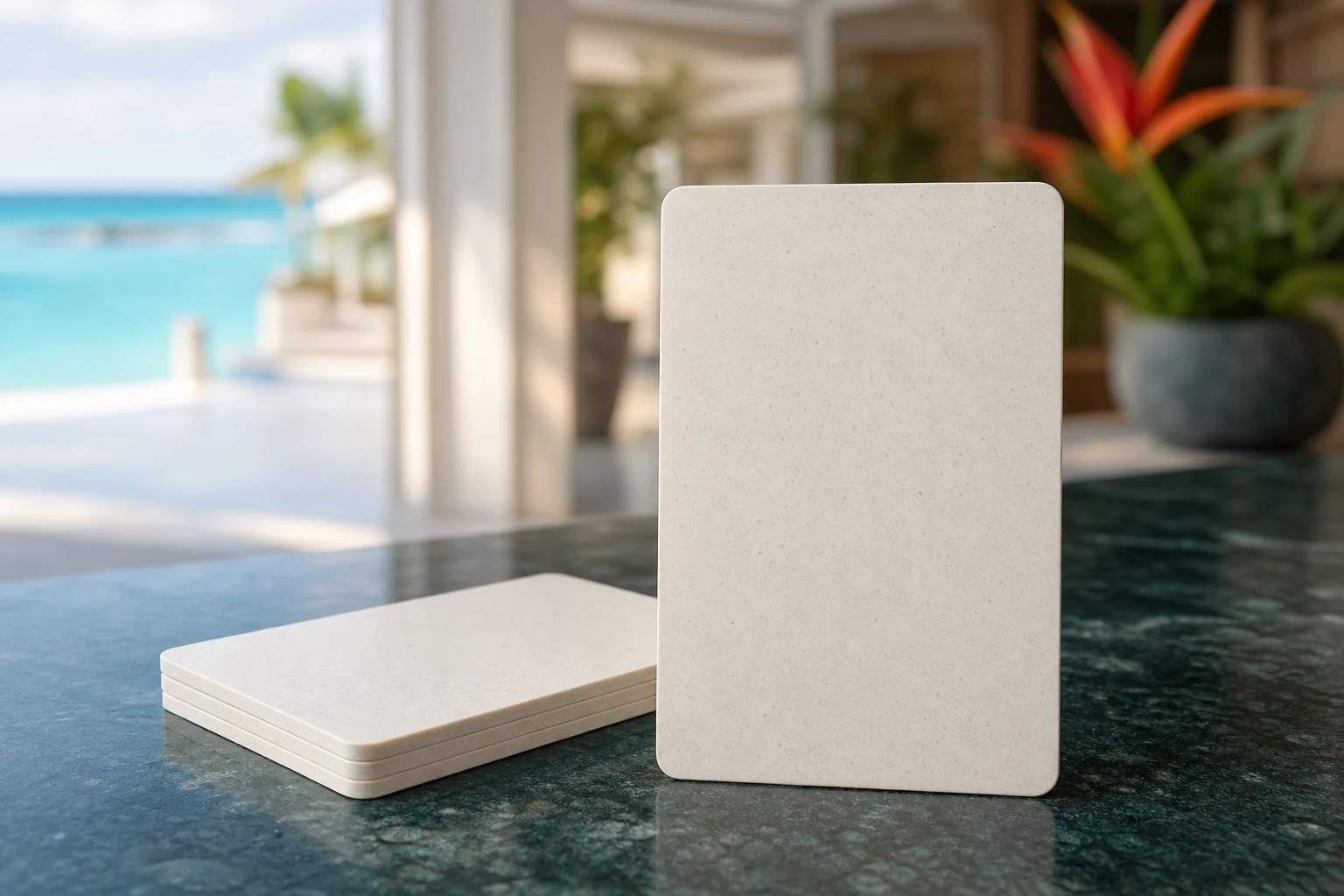
Documented recycled content
Card finish and print coverage
Credential and encoding requirement
Original product studies
Context at scale.
Construction up close.
Each image is an original illustrative product study created for this range. The approved production sample remains the controlling reference.
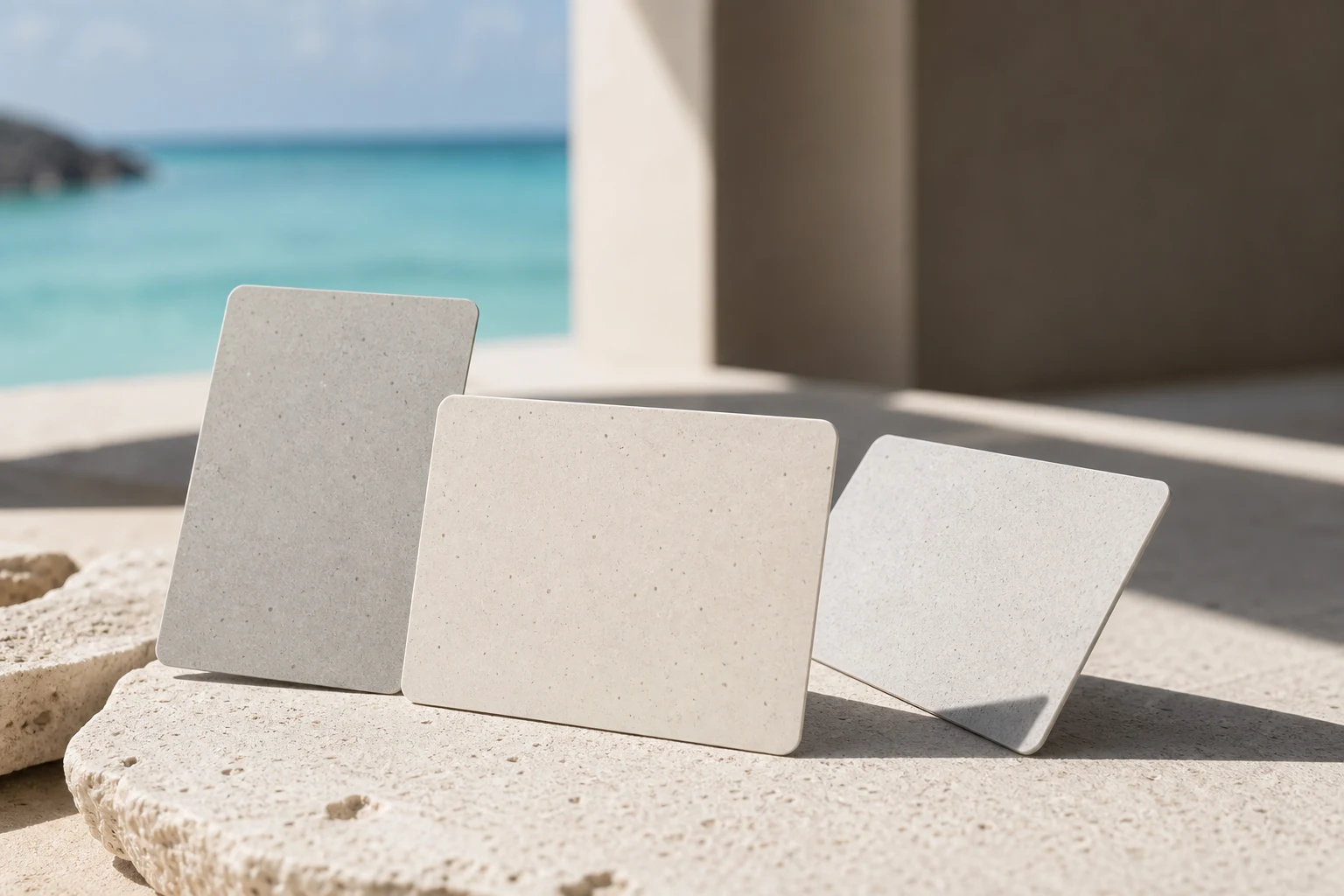
Material context / subtle body variation without unsupported claim symbols
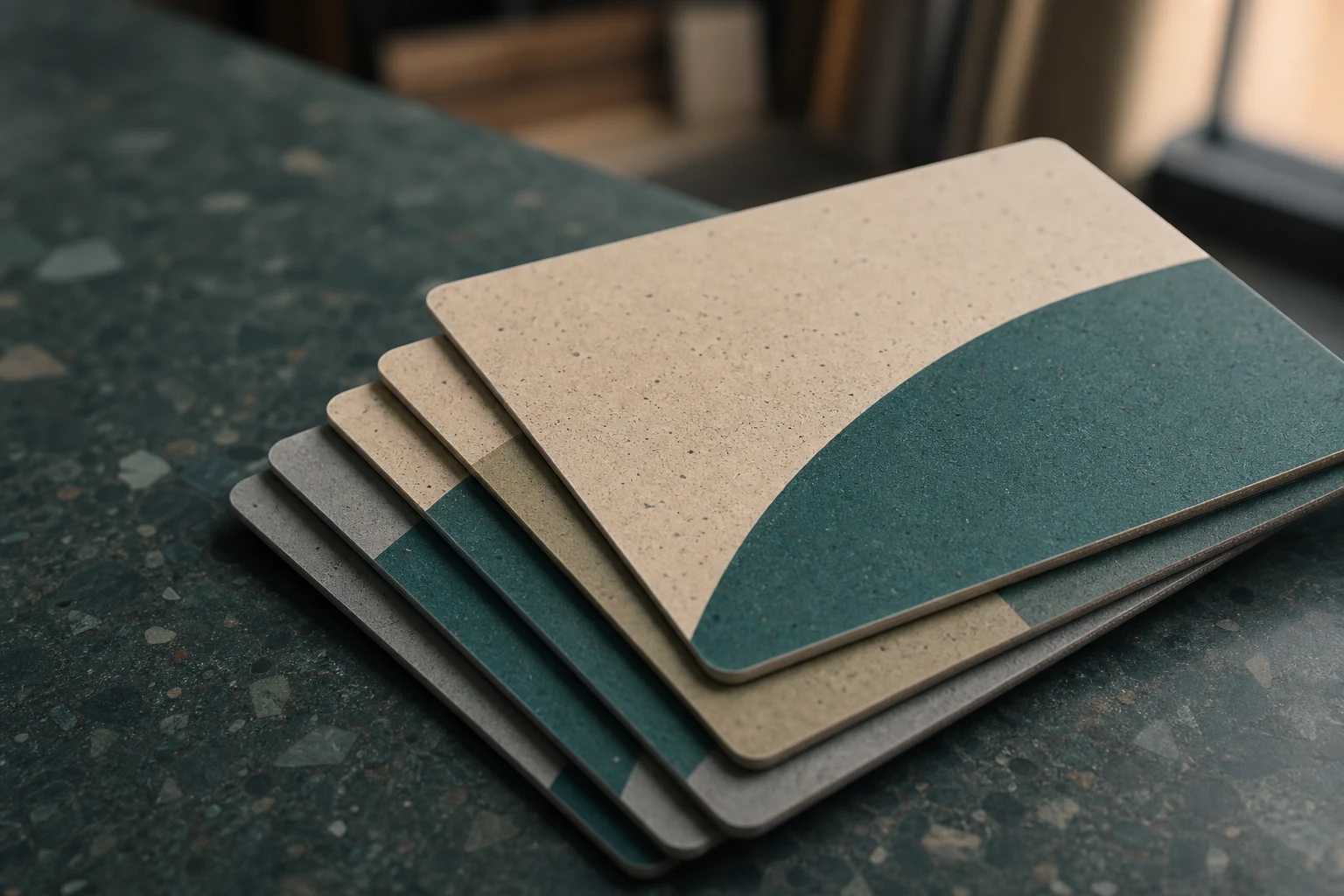
Material detail / flecked surface, print registration and edge finish
Specification
Four decisions before artwork.
The visible design is approved only after the functional brief is understood.
- 01
Documented recycled content
Record the exact proposed construction and supplied documentation.
- 02
Card finish and print coverage
Define the guest-facing finish without obscuring production limits.
- 03
Credential and encoding requirement
Confirm how the product will be issued, used and replaced.
- 04
Artwork claim review
Keep the agreed requirement in the production and reorder record.
Indicative production parameters
- Card format
- CR80, 85.6 × 54 mm
- Card body
- 0.76 mm
- Credential frequency
- 13.56 MHz (ISO/IEC 14443) or 125 kHz (LF), confirmed against the installed system
- Minimum order
- 500 pieces
- Production
- 14–21 days after artwork approval
These are planning figures for a standard run. The exact construction, credential and schedule are confirmed for the property and installed system before quotation.
Manufacturer detail
How the product is specified and released.
Physical construction, artwork and credential decisions stay connected throughout production.
Define the recycled-content claim
Recycled content must be tied to the exact supplied card body and current run documentation. The record identifies which component the evidence covers and how any stated content is calculated. We do not extend evidence for a body layer to print, coating, adhesive or the embedded RFID assembly, and we do not turn an input claim into a disposal claim.
Procurement wording, artwork and guest-facing communication should use the same qualified description. Symbols receive the same review as written claims because an icon can imply recyclability or a disposal outcome that the document does not establish. If the supplied construction changes on a reorder, the earlier wording is reopened before the artwork is released.
Approve the finished surface
The card follows the CR80 planning format of 85.6 × 54 mm and nominal 0.76 mm thickness, but recycled-content feedstock can introduce controlled visual variation. A physical proof shows how colour, flecking, opacity and edge appearance interact with the brand design. The acceptable range is agreed rather than hidden by a perfect digital rendering.
Solid coverage, small text, variable numbers and high-contact areas are reviewed on the proposed finish. A coating that improves one visual result can change friction or feed behaviour. We approve body, print and finish as a completed card, then retain that reference for comparison during production and any subsequent repeat run.
Keep access approval separate
Recycled material does not determine the credential. The installed environment must confirm 125 kHz LF or 13.56 MHz HF/NFC, supported encoding and the responsible system owner. We test the final proposed construction, because similar-looking card bodies can contain different credentials and an approved conventional card does not approve a new body automatically.
Where front-desk encoding is used, sample cards should pass through the normal equipment and issue sequence. Where supported data preparation is requested, the file, numbering and verification rule are recorded independently. This separation allows the material evidence and technical function to be accepted or corrected without confusing one approval with the other.
Create a defensible production record
The production release includes the body description, supporting document, exact claim, artwork, credential, quantity and packing instruction. The MOQ is 500 units per design, so property, language or claim variations are identified early. Carton labels can keep distinct designs and number ranges visible to the receiving team.
Repeat production checks the retained record against the currently available construction. A material-source or finish change is not treated as an invisible substitution. We pause for a new approval when the claim evidence, appearance or handling can differ, preserving the link between what the hotel says, what it approved and what we manufacture.
Compatibility boundary
The product body does not determine the credential.
Frequency, memory, encoding and system rules are confirmed separately. If compatibility cannot be established, the order should not proceed as an access credential.
See the compatibility process ↗Wrong fit
When recycled-content cards are the wrong direction.
Recycled-content cards are the wrong direction when the desired marketing statement is broader than the supplied evidence, when a local end-of-life outcome is implied without support, or when natural variation conflicts with an exact colour requirement. They are also wrong if the completed card does not feed through the installed encoder or pass the working-credential test. Material preference cannot override access reliability.
Confirm the product ↗Build the brief
Confirm the product and credential together.
Share the property, destination, product direction and any system information already available. The secure form sends the brief directly to our manufacturing team, with the product, quantity and system notes kept together for review.
Plan the order ↗