Guest registration
Credentials prepared around the issue list and arrival workflow.
Use case / Events
Events and guest venues need quick issue, visible differentiation and a firm end-of-use plan. Product choice follows access duration, guest movement, environmental exposure and the functions supported by the system.
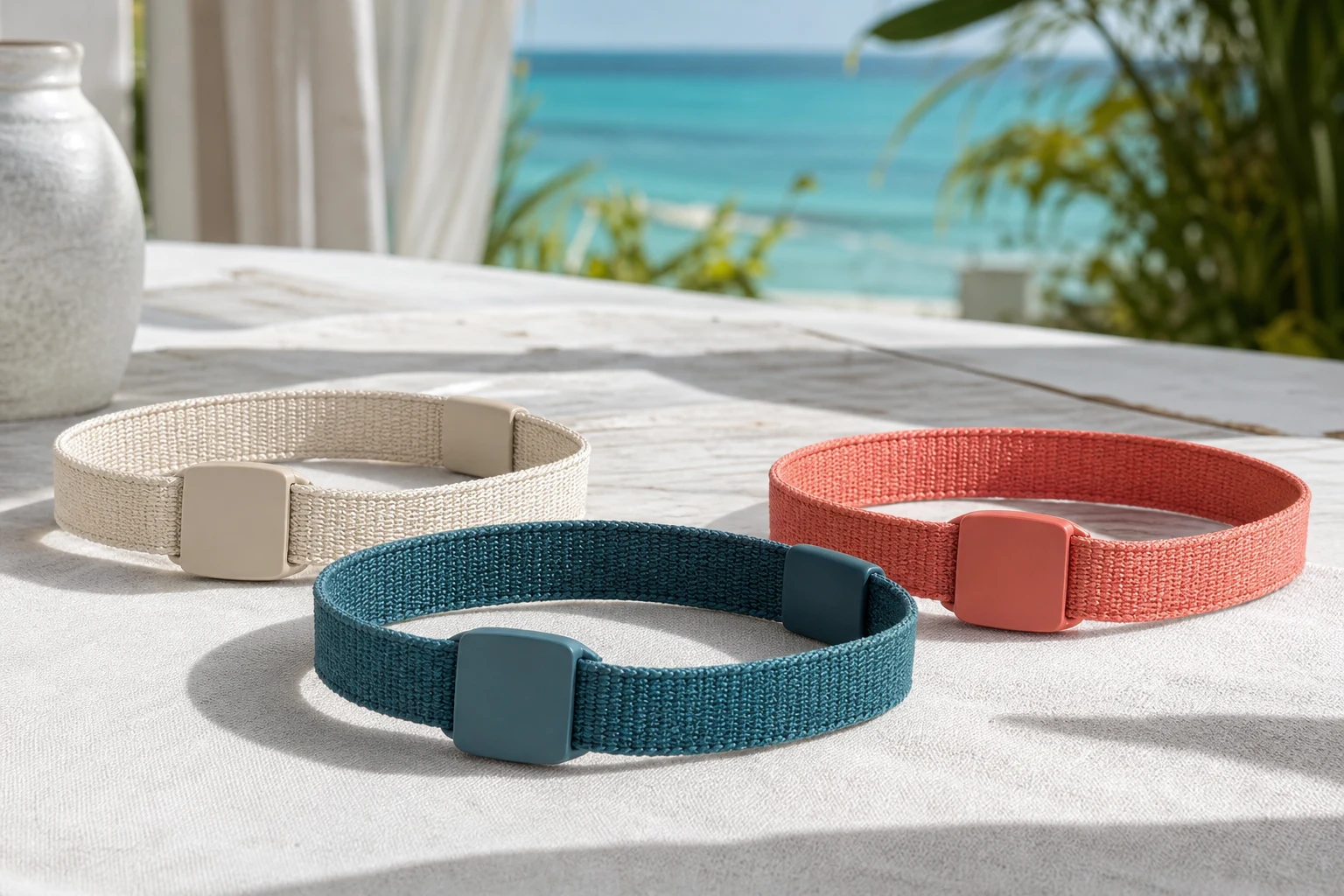
Time-bound credential issue
Zone and guest-group differentiation
Numbering and variable print
Operational fit
Product, credential and delivery decisions follow the use case—not the other way around.
Credentials prepared around the issue list and arrival workflow.
Colour and numbering can support operational separation.
Unused, returned and active credentials handled under an agreed process.
Manufacturer detail
These are production controls, not assumed functions of a property's access system.
An event credential is defined by a start and an end. Where the system enforces the window, that is the system owner's configuration and not something the physical product creates. Where the window is enforced by staff observation, it has to be visible on the object: a printed date, a session identifier, a colour that changes between days.
That makes variable data the centre of the specification rather than a finishing detail. The property defines the fields, the ranges and which are printed, encoded or both; we reproduce the approved instruction and report what was produced. Getting the field list settled before artwork avoids the most common event failure, which is discovering at proof stage that a needed identifier has nowhere to sit.
Events tend to generate a long list of categories: general admission, hospitality, production, artist, contractor, media. Manufactured as separate designs, that is six production items each with its own minimum, at quantities that often do not justify them. A shared body with a printed zone field, a colour block or a numbered range usually carries the same separation.
Deciding which categories genuinely need to be distinguishable at a distance normally shortens the list. The specification records the differentiator and whether it is visual or encoded — a printed zone tells a steward something, but access enforcement stays with the system. Where the two are confused, a property ends up with credentials that look controlled without being controlled.
Most event credentials are issued once and not returned, so the construction is chosen for a short defined wear period rather than for durability. That reduces cost per piece, but it makes the count matter more: there is no reissue pool to fall back on, and a shortfall on the day cannot be manufactured around.
The close-out plan belongs in the brief alongside the count. Unused stock, returned credentials and any range that was never issued should have an agreed handling process before the event, including whether unused ranges are retained for a future date or withdrawn. Where numbering was used, the release record identifies exactly which ranges were produced, which makes reconciliation after the event a checking exercise rather than an investigation.
Events have a fixed date, which changes the shape of the risk. Artwork approval, variable-data proofing and production all have to complete before a deadline that cannot move, and a late correction has nowhere to go. We work backwards from the date and state what has to be settled by when, including the point after which a variable-data change is no longer possible.
The count is planned against expected admissions plus a contingency the property sets, not against a round number. Because there is usually no second run, it is worth deciding the contingency explicitly rather than absorbing it into an approximate order quantity. Production timing and delivery are confirmed per order and remain conditional on approval dates being met.
Build the brief
Share the property, destination, product direction and any system information already available. The secure form sends the brief directly to our manufacturing team, with the product, quantity and system notes kept together for review.
Plan the order ↗