Product / Wristbands
A flexible textile credential with artwork built into the guest-wear format.
Woven wristbands combine a flexible textile carrier with an integrated RFID component. Weave, edge finish, closure, sizing, wear period and the installed system belong in one controlled product brief.
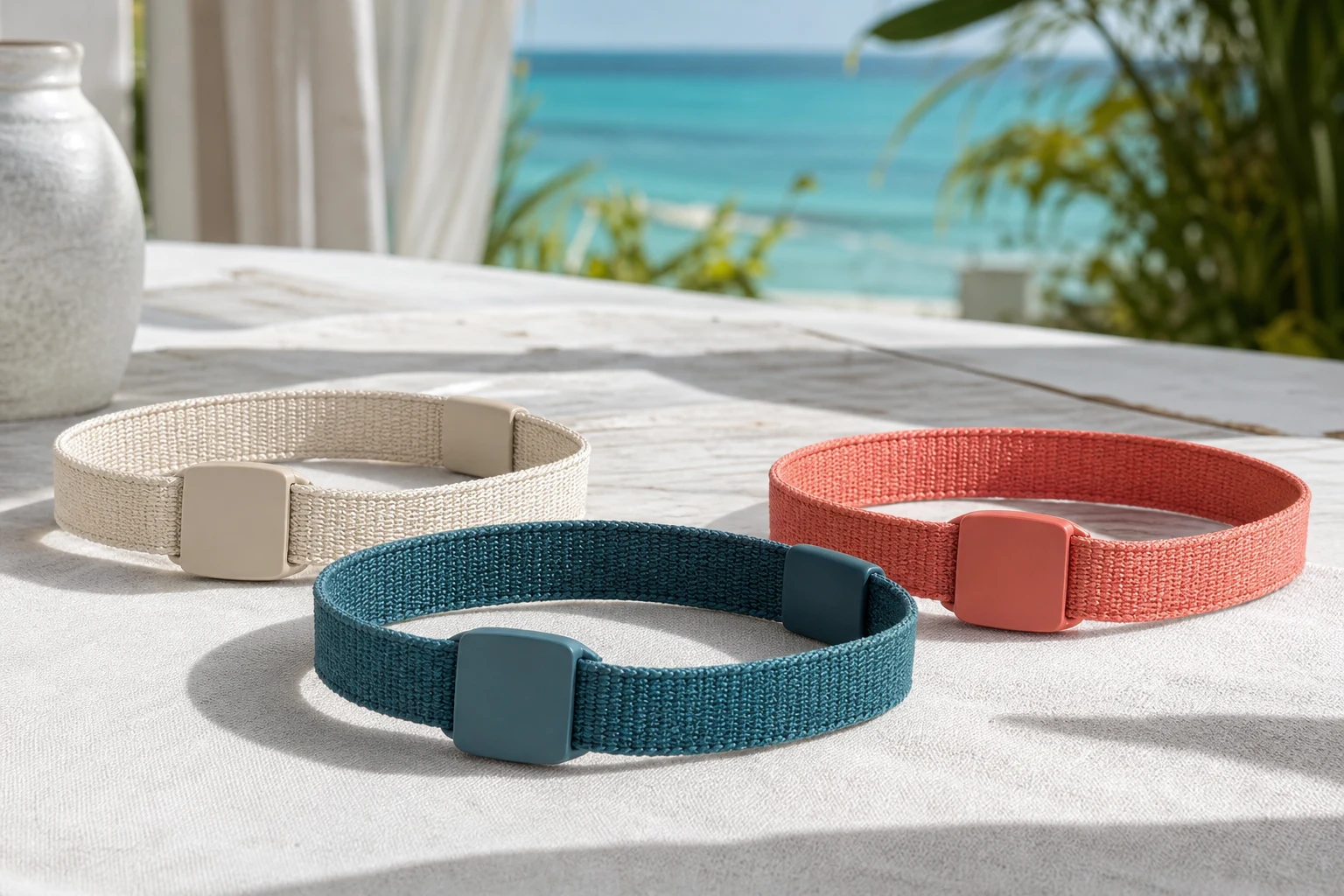
Weave, width and edge finish
Closure and sizing
Artwork and visual grouping
Original product studies
Context at scale.
Construction up close.
Each image is an original illustrative product study created for this range. The approved production sample remains the controlling reference.
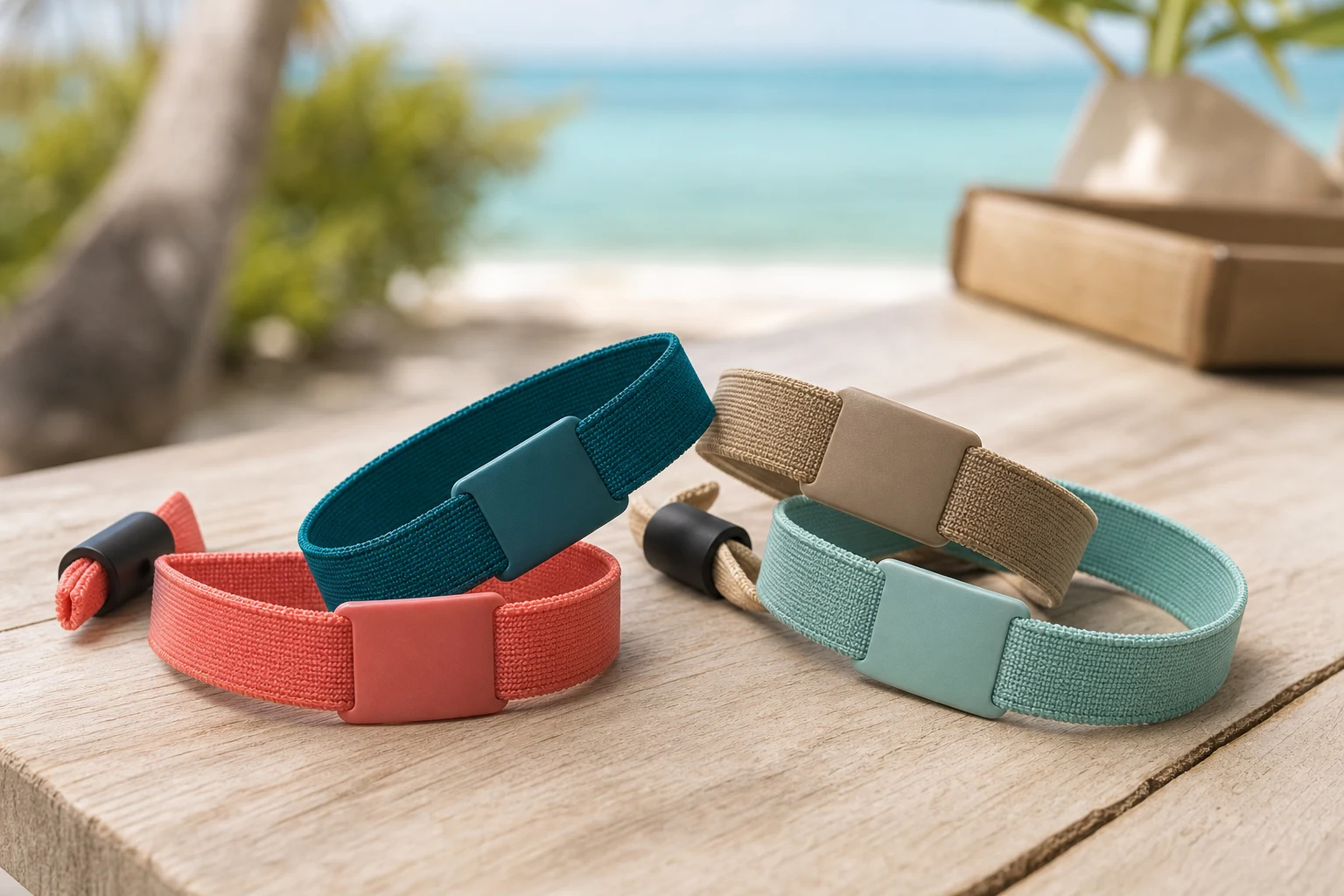
Guest-wear context / woven carriers, compact faces and closure options
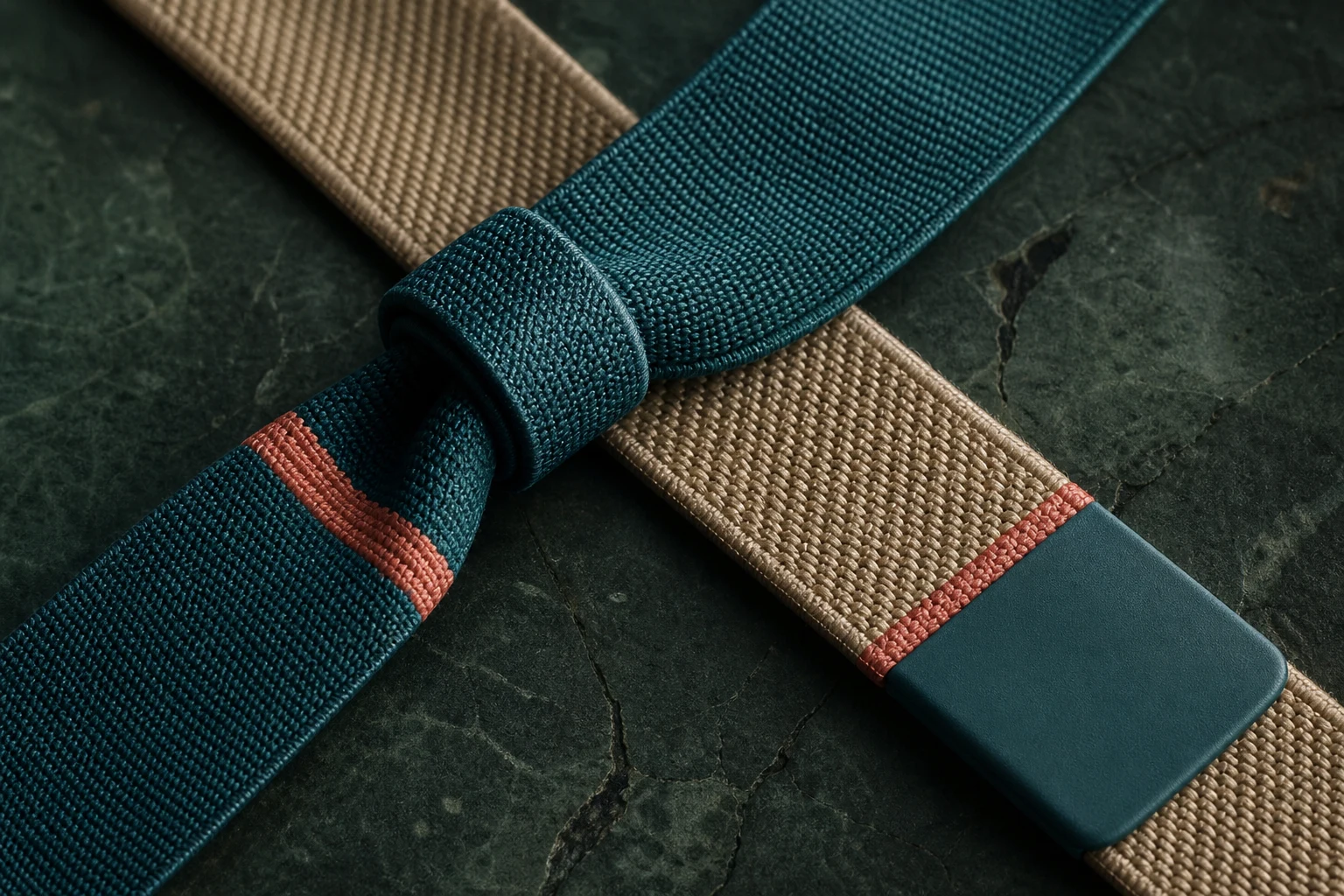
Textile detail / thread structure, selvedge edges and sealed-face transition
Specification
Four decisions before artwork.
The visible design is approved only after the functional brief is understood.
- 01
Weave, width and edge finish
Record the exact proposed construction and supplied documentation.
- 02
Closure and sizing
Define the guest-facing finish without obscuring production limits.
- 03
Artwork and visual grouping
Confirm how the product will be issued, used and replaced.
- 04
Credential and supported functions
Keep the agreed requirement in the production and reorder record.
Indicative production parameters
- Credential frequency
- 13.56 MHz (ISO/IEC 14443) or 125 kHz (LF), confirmed against the installed system
- Minimum order
- 500 pieces
- Production
- 14–21 days after artwork approval
These are planning figures for a standard run. The exact construction, credential and schedule are confirmed for the property and installed system before quotation.
Manufacturer detail
How the product is specified and released.
Physical construction, artwork and credential decisions stay connected throughout production.
Build the textile carrier
A woven wristband is specified by fibre composition, weave structure, width, edge treatment, colour method and how the RFID component is enclosed. We approve the complete wearable rather than a textile ribbon alone. Seams, transitions and the relationship between the soft carrier and firmer RFID face determine both comfort and durability.
Woven artwork has its own resolution. Letterforms, small icons and gradients that work in print may lose definition in thread. The design is simplified around the selected weave, reviewed at full physical scale and checked across the curved worn surface. A screen image cannot establish thread colour, edge sharpness or tactile finish.
Match closure to entitlement
A one-way closure can make removal evident and support stay-specific issue, but it requires correct sizing and a defined removal process. Adjustable or reusable closures simplify fitting yet may allow transfer. The hotel decides the entitlement rule first; we then manufacture the closure, length and tail treatment to fit that rule.
Guest sizing is validated across the expected wearer range. Excess tail can snag, remain wet or obscure decoration, while a narrow range can cause uncomfortable tension. Where children and adults share the programme, separate lengths or a carefully tested adjustment system can be clearer than assuming one product will fit every wrist.
Observe the band after moisture
The sample trial covers water, sweat, sunscreen, repeated drying, flexing and friction over the intended wear period. We look for edge curl, fraying, colour movement, trapped moisture and changes around the sealed electronic area. Textile softness at first issue does not prove comfort after several days of active use.
A woven band can be appropriate for events, activities or resort journeys where flexible wear and visual detail matter. It is not automatically suitable for continuous immersion. The property’s exposure pattern determines whether the textile construction, coating and closure remain credible or whether a faster-drying profile should be selected.
Separate visual identity from access
Colour and weave can identify guest groups, dates or packages, while the electronic core carries only supported system data. We confirm 125 kHz LF or 13.56 MHz HF/NFC from the installed environment and test the completed band. Visual categories and reader permissions are documented separately to avoid assuming one creates the other.
The retained file contains weave, colours, length, closure, RFID requirement, artwork, numbering and packing. Production begins from an MOQ of 500 units per design. A reorder uses that controlled reference and returns to approval if the textile source, closure or installed system has changed.
Compatibility boundary
The product body does not determine the credential.
Frequency, memory, encoding and system rules are confirmed separately. If compatibility cannot be established, the order should not proceed as an access credential.
See the compatibility process ↗Wrong fit
When woven wristbands are the wrong direction.
Woven bands are the wrong direction for continuous immersion or prolonged wet wear when the sample dries slowly, frays or becomes uncomfortable. An adjustable closure is wrong where transfer must be evident, while a one-way closure is wrong for a true collection-and-reissue programme. The format should also be rejected if its textile artwork cannot reproduce required safety or identification information clearly.
Confirm the product ↗Build the brief
Confirm the product and credential together.
Share the property, destination, product direction and any system information already available. The secure form sends the brief directly to our manufacturing team, with the product, quantity and system notes kept together for review.
Plan the order ↗